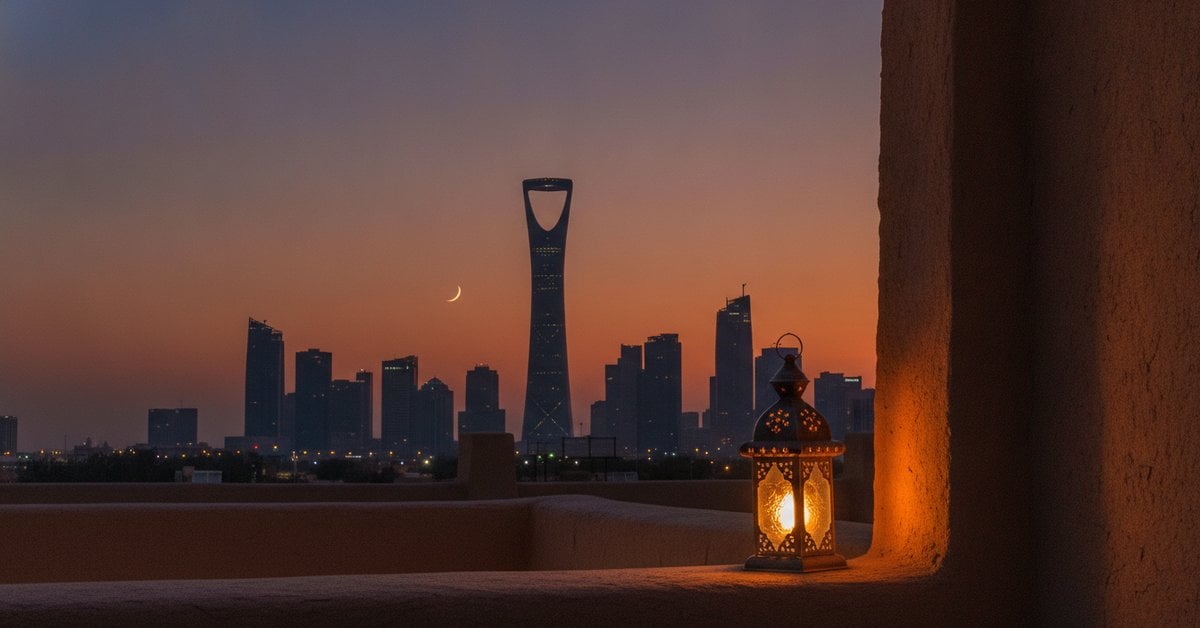
Ramadan 2027 is expected to begin in Saudi Arabia on Monday, 8 February, subject to the Supreme Court's moon sighting on Sunday, 7 February. Here are the expected dates, the full Sehri and Iftar timetable for Riyadh, Jeddah and Dammam, working hours and the Eid al-Fitr holiday, updated as official announcements come in.
Expected Ramadan 2027 Dates At A Glance
Ramadan 1448 AH follows Sha'ban 1448. According to Saudi Arabia's official Umm al-Qura calendar, the first day of fasting is expected on Monday, 8 February 2027.
| What | Expected date | Notes |
|---|---|---|
| Moon sighting evening, the "night of doubt" (29 Sha'ban 1448) | Sunday, 7 February 2027 | The Supreme Court asks Muslims to look for the crescent |
| First Taraweeh prayer | Sunday evening, 7 February 2027 | Only if the crescent is sighted |
| First day of fasting | Monday, 8 February 2027 | Expected, Umm al-Qura calendar |
| Last day of fasting (29 days) | Monday, 8 March 2027 | If the Shawwal crescent is sighted on 8 March |
| Last day of fasting (30 days) | Tuesday, 9 March 2027 | If the crescent is not sighted |
| First day of Eid al-Fitr | Tuesday, 9 March or Wednesday, 10 March 2027 | Depends on the Shawwal sighting |
One calendar website projects an earlier start on 6 February. Astronomical data does not support that: the new moon is born on 6 February 2027, and the crescent cannot be seen anywhere that evening. We will update this page as soon as the Supreme Court makes its announcement.
Ramadan Moon Sighting: How Saudi Arabia Announces The Start
Saudi Arabia does not rely on the calendar alone. The month begins only when the crescent moon is actually seen, or when Sha'ban completes 30 days.
The Supreme Court's call
A few days before 29 Sha'ban, the Supreme Court calls on Muslims across the Kingdom to look for the crescent on the evening of the 29th. Anyone who sees it with the naked eye or through binoculars is asked to report to the nearest court and register their testimony.
The official announcement
The moon sighting committee meets on the evening of 29 Sha'ban. The decision is published the same night by the Royal Court and the Saudi Press Agency (SPA), and is carried by TV, radio and the official accounts of the Supreme Court. If the crescent is sighted, fasting starts the next morning. If it is not, Sha'ban completes 30 days and Ramadan starts a day later.
Why the expected date can change by one day
The Umm al-Qura calendar is calculated in advance, but the sighting decides. In 2026, for example, the Eid crescent was not seen on 29 Ramadan, so Ramadan completed 30 days and Eid moved to the following day. Plan travel and leave with one day of flexibility on both ends of the month.
Ramadan 1448 (2027) Timetable: Sehri And Iftar In Riyadh, Jeddah And Dammam
Ramadan 2027 falls in late winter, so fasting days in Saudi Arabia are among the shortest of recent years: about 12 and a half hours at the start of the month, rising to just over 13 hours by the end.
The timetables below are calculated with the Umm al-Qura method used by Saudi mosques (Fajr at 18.5 degrees, Iftar at sunset). They are planning estimates and can differ by a minute or two from your local mosque; during Ramadan, always follow the official prayer times for your city. If Ramadan starts a day later than expected, the times for each calendar date stay the same; only the Ramadan day numbers move by one.
Riyadh
| Ramadan day | Date | Sehri ends (Fajr) | Iftar (Maghrib) | Fasting time |
|---|---|---|---|---|
| 1 | Mon 8 Feb | 05:12 | 17:43 | 12h 31m |
| 2 | Tue 9 Feb | 05:12 | 17:44 | 12h 32m |
| 3 | Wed 10 Feb | 05:11 | 17:44 | 12h 33m |
| 4 | Thu 11 Feb | 05:11 | 17:45 | 12h 34m |
| 5 | Fri 12 Feb | 05:10 | 17:46 | 12h 36m |
| 6 | Sat 13 Feb | 05:10 | 17:46 | 12h 36m |
| 7 | Sun 14 Feb | 05:09 | 17:47 | 12h 38m |
| 8 | Mon 15 Feb | 05:09 | 17:48 | 12h 39m |
| 9 | Tue 16 Feb | 05:08 | 17:48 | 12h 40m |
| 10 | Wed 17 Feb | 05:07 | 17:49 | 12h 42m |
| 11 | Thu 18 Feb | 05:07 | 17:49 | 12h 42m |
| 12 | Fri 19 Feb | 05:06 | 17:50 | 12h 44m |
| 13 | Sat 20 Feb | 05:05 | 17:50 | 12h 45m |
| 14 | Sun 21 Feb | 05:05 | 17:51 | 12h 46m |
| 15 | Mon 22 Feb | 05:04 | 17:52 | 12h 48m |
| 16 | Tue 23 Feb | 05:03 | 17:52 | 12h 49m |
| 17 | Wed 24 Feb | 05:02 | 17:53 | 12h 51m |
| 18 | Thu 25 Feb | 05:02 | 17:53 | 12h 51m |
| 19 | Fri 26 Feb | 05:01 | 17:54 | 12h 53m |
| 20 | Sat 27 Feb | 05:00 | 17:54 | 12h 54m |
| 21 | Sun 28 Feb | 04:59 | 17:55 | 12h 56m |
| 22 | Mon 1 Mar | 04:58 | 17:55 | 12h 57m |
| 23 | Tue 2 Mar | 04:57 | 17:56 | 12h 59m |
| 24 | Wed 3 Mar | 04:57 | 17:56 | 12h 59m |
| 25 | Thu 4 Mar | 04:56 | 17:57 | 13h 01m |
| 26 | Fri 5 Mar | 04:55 | 17:57 | 13h 02m |
| 27 | Sat 6 Mar | 04:54 | 17:58 | 13h 04m |
| 28 | Sun 7 Mar | 04:53 | 17:58 | 13h 05m |
| 29 | Mon 8 Mar | 04:52 | 17:59 | 13h 07m |
| 30 | Tue 9 Mar | 04:51 | 17:59 | 13h 08m |
Jeddah
| Ramadan day | Date | Sehri ends (Fajr) | Iftar (Maghrib) | Fasting time |
|---|---|---|---|---|
| 1 | Mon 8 Feb | 05:40 | 18:17 | 12h 37m |
| 2 | Tue 9 Feb | 05:40 | 18:18 | 12h 38m |
| 3 | Wed 10 Feb | 05:39 | 18:18 | 12h 39m |
| 4 | Thu 11 Feb | 05:39 | 18:19 | 12h 40m |
| 5 | Fri 12 Feb | 05:39 | 18:19 | 12h 40m |
| 6 | Sat 13 Feb | 05:38 | 18:20 | 12h 42m |
| 7 | Sun 14 Feb | 05:38 | 18:20 | 12h 42m |
| 8 | Mon 15 Feb | 05:37 | 18:21 | 12h 44m |
| 9 | Tue 16 Feb | 05:37 | 18:21 | 12h 44m |
| 10 | Wed 17 Feb | 05:36 | 18:22 | 12h 46m |
| 11 | Thu 18 Feb | 05:35 | 18:22 | 12h 47m |
| 12 | Fri 19 Feb | 05:35 | 18:23 | 12h 48m |
| 13 | Sat 20 Feb | 05:34 | 18:23 | 12h 49m |
| 14 | Sun 21 Feb | 05:34 | 18:24 | 12h 50m |
| 15 | Mon 22 Feb | 05:33 | 18:24 | 12h 51m |
| 16 | Tue 23 Feb | 05:32 | 18:25 | 12h 53m |
| 17 | Wed 24 Feb | 05:32 | 18:25 | 12h 53m |
| 18 | Thu 25 Feb | 05:31 | 18:26 | 12h 55m |
| 19 | Fri 26 Feb | 05:30 | 18:26 | 12h 56m |
| 20 | Sat 27 Feb | 05:30 | 18:26 | 12h 56m |
| 21 | Sun 28 Feb | 05:29 | 18:27 | 12h 58m |
| 22 | Mon 1 Mar | 05:28 | 18:27 | 12h 59m |
| 23 | Tue 2 Mar | 05:27 | 18:28 | 13h 01m |
| 24 | Wed 3 Mar | 05:27 | 18:28 | 13h 01m |
| 25 | Thu 4 Mar | 05:26 | 18:29 | 13h 03m |
| 26 | Fri 5 Mar | 05:25 | 18:29 | 13h 04m |
| 27 | Sat 6 Mar | 05:24 | 18:29 | 13h 05m |
| 28 | Sun 7 Mar | 05:23 | 18:30 | 13h 07m |
| 29 | Mon 8 Mar | 05:23 | 18:30 | 13h 07m |
| 30 | Tue 9 Mar | 05:22 | 18:30 | 13h 08m |
Dammam and Al Khobar
| Ramadan day | Date | Sehri ends (Fajr) | Iftar (Maghrib) | Fasting time |
|---|---|---|---|---|
| 1 | Mon 8 Feb | 05:00 | 17:27 | 12h 27m |
| 2 | Tue 9 Feb | 04:59 | 17:28 | 12h 29m |
| 3 | Wed 10 Feb | 04:59 | 17:29 | 12h 30m |
| 4 | Thu 11 Feb | 04:58 | 17:29 | 12h 31m |
| 5 | Fri 12 Feb | 04:58 | 17:30 | 12h 32m |
| 6 | Sat 13 Feb | 04:57 | 17:31 | 12h 34m |
| 7 | Sun 14 Feb | 04:56 | 17:31 | 12h 35m |
| 8 | Mon 15 Feb | 04:56 | 17:32 | 12h 36m |
| 9 | Tue 16 Feb | 04:55 | 17:33 | 12h 38m |
| 10 | Wed 17 Feb | 04:54 | 17:33 | 12h 39m |
| 11 | Thu 18 Feb | 04:54 | 17:34 | 12h 40m |
| 12 | Fri 19 Feb | 04:53 | 17:35 | 12h 42m |
| 13 | Sat 20 Feb | 04:52 | 17:35 | 12h 43m |
| 14 | Sun 21 Feb | 04:51 | 17:36 | 12h 45m |
| 15 | Mon 22 Feb | 04:51 | 17:37 | 12h 46m |
| 16 | Tue 23 Feb | 04:50 | 17:37 | 12h 47m |
| 17 | Wed 24 Feb | 04:49 | 17:38 | 12h 49m |
| 18 | Thu 25 Feb | 04:48 | 17:38 | 12h 50m |
| 19 | Fri 26 Feb | 04:47 | 17:39 | 12h 52m |
| 20 | Sat 27 Feb | 04:46 | 17:40 | 12h 54m |
| 21 | Sun 28 Feb | 04:46 | 17:40 | 12h 54m |
| 22 | Mon 1 Mar | 04:45 | 17:41 | 12h 56m |
| 23 | Tue 2 Mar | 04:44 | 17:41 | 12h 57m |
| 24 | Wed 3 Mar | 04:43 | 17:42 | 12h 59m |
| 25 | Thu 4 Mar | 04:42 | 17:42 | 13h 00m |
| 26 | Fri 5 Mar | 04:41 | 17:43 | 13h 02m |
| 27 | Sat 6 Mar | 04:40 | 17:43 | 13h 03m |
| 28 | Sun 7 Mar | 04:39 | 17:44 | 13h 05m |
| 29 | Mon 8 Mar | 04:38 | 17:45 | 13h 07m |
| 30 | Tue 9 Mar | 04:37 | 17:45 | 13h 08m |
Working Hours During Ramadan
Private sector
Under Article 98 of the Saudi Labor Law, working hours for Muslim employees in the private sector during Ramadan may not exceed 6 hours a day or 36 hours a week. The Ministry of Human Resources and Social Development (HRSD) confirms this rule each year. Non-Muslim employees can be asked to work their normal hours, although many companies apply the shorter day to all staff for simplicity. Work beyond the reduced hours counts as overtime and is paid at the normal overtime rate.
Government offices and Jawazat
Government offices move to shorter days during Ramadan, usually opening mid-morning and closing in the early afternoon. The exact hours are announced each year, so check with the office before you visit. Most services, including Absher, Muqeem and Qiwa, stay available online throughout the month, so many visits to Jawazat or Muroor offices can be avoided altogether.
Banks and money transfer centres
The Saudi Central Bank (SAMA) sets fixed Ramadan hours for banks: branches that serve customers open from 10:00 a.m. to 4:00 p.m. Money transfer centres and payment service providers work 6 flexible hours between 9:30 a.m. and 5:30 p.m. SAMA has already published its Eid al-Fitr 2027 bank holiday as 7 to 11 March 2027, subject to the moon sighting.
Schools
School hours are shortened during Ramadan, and the school calendar decides whether classes continue through the month. Parents should follow the announcements of the Ministry of Education and their own school.
Eid Al-Fitr 2027: Expected Date And Holiday
Eid al-Fitr 1448 is expected on Tuesday, 9 March 2027 if Ramadan has 29 days, or Wednesday, 10 March 2027 if it has 30. The Supreme Court will call for the Shawwal sighting on the evening of 29 Ramadan.
For private sector workers, the Labor Law gives a 4-day Eid al-Fitr holiday. In 2026, HRSD announced that the holiday began after work ended on 29 Ramadan and lasted 4 days. When an official holiday falls on a weekly rest day, the employee is compensated with an extra day. Government employees usually receive a longer Eid break, announced separately each year. We will add the official 2027 holiday dates here as soon as HRSD and the government announce them.
Mosque Rules During Ramadan
Every year the Ministry of Islamic Affairs issues rules for mosques during Ramadan. The main points that worshippers notice are:
• Outside loudspeakers are used only for the Adhan and the Iqama; Taraweeh and other prayers are heard through indoor speakers only.
• Prayer times follow the Umm al-Qura calendar, with about 15 minutes between the Adhan and the prayer for Fajr and Isha.
• Filming the imam and worshippers during prayers, and broadcasting prayers live on any platform, is not allowed.
• Iftar meals in mosques are served only in the courtyard set aside for them, under the supervision of mosque staff; collecting cash donations for Iftar projects is not allowed.
• Those who want to stay in the mosque for I'tikaf in the last ten nights must register with the mosque; non-Saudis need the approval of their employer.
• Tahajjud prayers in the last ten nights finish before dawn.
What Changes For Expats During Ramadan
Eating, drinking and smoking in public
Everyone, Muslim or not, is expected not to eat, drink or smoke in public during fasting hours. This includes streets, offices, shops and cars that can be seen from outside. The Ministry of Interior has warned in past years that violators can face penalties, including the loss of their job and deportation for expatriates. Eat and drink privately at home or in a closed office kitchen.
Restaurants, shops and malls
Most restaurants and cafes stay closed during the day and open shortly before Iftar, with many serving until Sehri. Malls and shops often open later in the afternoon and stay open late into the night, especially in the last ten days before Eid. Supermarkets and pharmacies usually keep daytime hours. Hours differ from place to place, so check each mall's announcement.
Traffic and travel
Roads become very busy in the hour before Iftar, as everyone tries to reach home in time. Avoid long drives just before sunset. Makkah and Madinah receive record numbers of Umrah pilgrims in Ramadan, especially in the last ten nights, so book early if you plan Umrah, and remember that Umrah permits are issued through the Nusuk app.
Charity and Zakat al-Fitr
Ramadan is also the month of giving. Zakat al-Fitr must be paid before the Eid prayer, and many expats donate food or money through registered Saudi charities and official platforms.
Ramadan Shopping: Sales, Dates, Sweets And Tents
Ramadan sales season
The Ministry of Commerce opens a special Ramadan and Eid discount season every year, usually starting about two weeks before Ramadan and running until just after Eid. In 2026 it ran for 54 days, from 1 February to 26 March. Only shops with a discount licence may advertise Ramadan sales: you can check any offer by scanning the barcode on the shop's discount licence with your phone camera. The 2027 season dates will be announced by the Ministry of Commerce in early 2027.
Find Ramadan essentials near you
ArabLocal lists thousands of businesses across Saudi Arabia. For Ramadan and Eid, these are the categories most people look for:
• Dates shops and dates dealers for Iftar
• Sweet shops for Ramadan and Eid sweets
• Bakeries for fresh bread and Ramadan specials
• Catering services for family and company Iftar gatherings
• Tents and tarpaulins for Ramadan tents and majlis
• Charities for Zakat, Iftar and food baskets
Past Ramadan Start Dates In Saudi Arabia
| Year | Hijri year | First day of Ramadan | First day of Eid al-Fitr | Length of Ramadan |
|---|---|---|---|---|
| 2024 | 1445 | Monday, 11 March 2024 | Wednesday, 10 April 2024 | 30 days |
| 2025 | 1446 | Saturday, 1 March 2025 | Sunday, 30 March 2025 | 29 days |
| 2026 | 1447 | Wednesday, 18 February 2026 | Friday, 20 March 2026 | 30 days |
| 2027 | 1448 | Monday, 8 February 2027 (expected) | 9 or 10 March 2027 (expected) | 29 or 30 days |
Ramadan moves about 11 days earlier every year, because the Islamic calendar follows the moon. By 2030, Ramadan will begin in early January.
Frequently Asked Questions
When does Ramadan 2027 start in Saudi Arabia?
Ramadan 2027 is expected to start on Monday, 8 February 2027, according to the Umm al-Qura calendar. The official start depends on the Supreme Court's moon sighting on the evening of Sunday, 7 February.
How many days are left until Ramadan 2027?
Ramadan 2027 is expected to begin on Monday, 8 February 2027. Count the days from today to that date, and add one day if the crescent is not sighted on the evening of 7 February.
When is Eid al-Fitr 2027 in Saudi Arabia?
Eid al-Fitr 2027 is expected on Tuesday, 9 March or Wednesday, 10 March 2027, depending on the Shawwal moon sighting.
How many hours do you fast in Riyadh during Ramadan 2027?
About 12 hours 31 minutes on the first day, rising to just over 13 hours by the end of the month. Jeddah and Dammam are within a few minutes of Riyadh.
What time is Iftar in Riyadh on the first day of Ramadan 2027?
Around 5:43 p.m. on Monday, 8 February 2027, with Sehri ending around 5:12 a.m. Jeddah: about 6:17 p.m.; Dammam: about 5:27 p.m.
What are bank working hours in Saudi Arabia during Ramadan?
Bank branches open from 10:00 a.m. to 4:00 p.m. during Ramadan, as set by the Saudi Central Bank (SAMA).
What are the working hours in Saudi Arabia during Ramadan?
Muslim employees in the private sector work a maximum of 6 hours a day or 36 hours a week, under Article 98 of the Labor Law. Government offices announce their own reduced hours each year.
Can non-Muslims eat in public in Saudi Arabia during Ramadan?
No. Everyone is expected not to eat, drink or smoke in public during fasting hours, and violations can lead to penalties.
How many days is the Eid al-Fitr holiday for the private sector?
4 days under the Labor Law. In 2026 it began after work ended on 29 Ramadan.