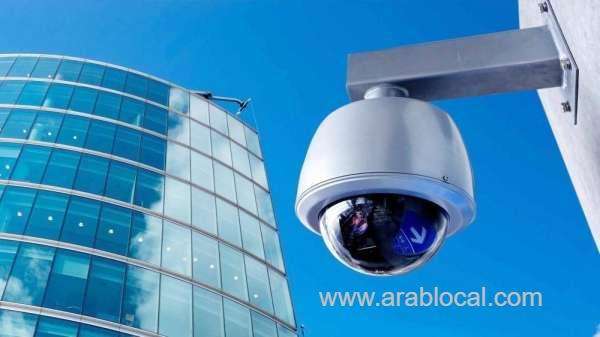
Saudi Data and Artificial Intelligence Authority (SDAIA) and Presidency of State Security are tasked with implementing the provisions of the Law of Security Surveillance Cameras, approved by the Council of Ministers. These government bodies will determine each category's mandatory deadline for installing cameras and security monitoring devices.
According to Okaz/Saudi Gazette, surveillance cameras must be fixed or mobile, and do not include those installed inside private residential compounds. It is prohibited by law to install security surveillance cameras in medical examination rooms, inpatient rooms, physiotherapy rooms, changing rooms, and women's clubs, as well as toilets, salons, and women's clubs.
According to article 5 of the law, security surveillance cameras cannot be manufactured, imported, sold, installed, operated or maintained without obtaining the necessary approvals.
Ministry, public authority, and institution provisions regarding installation of security surveillance cameras will apply to oil and petrochemical facilities, power generation facilities, water desalination facilities, air tourism facilities, commercial malls and shopping centers, along with financial institutions, banks, money transfer centers, and residential buildings, including complexes in residential buildings.
It will also apply to the Grand Mosque in Makkah, the Prophet's Mosque in Madinah, the holy sites of Mina, Arafat, and Muzdalifah, as well as mosques, clubs, sports facilities, stadiums, cultural facilities, youth centers, recreational facilities, and health facilities, both public and private.
A medical city, a hospital, a clinic, a commercial warehouse, as well as main roads and intersections within a city, highways that connect cities and governorates, fuel stations and gas sales outlets, educational facilities and food service facilities will also be covered by it.
This law applies to public transport, event and festival venues, places of economic and commercial activity, public and private museums, and historical and heritage sites that are ready to receive visitors. Security surveillance cameras can be installed at any other site, activity, or facility that the Ministry of Interior deems appropriate.
It is the responsibility of the people responsible for implementing the law to install, maintain, and operate security surveillance cameras around the clock, and to preserve the recordings. Furthermore, the law stipulates that the recording shall be preserved and will not be modified until the investigation procedure is completed if any specific accident is reported.
In order to comply with the law, devices are classified as high-sensitivity entities or facilities that must be connected directly to their security surveillance cameras; medium-sensitive destinations, facilities, or properties, and low-sensitive destinations and facilities that do not need to be linked to the operating room.
It is required that there be a visible sign or panel displaying that the premises are equipped with security surveillance cameras. Their features, numbers, and locations are specified in the regulations.
Camera video footage cannot be transferred or published unless approved by the Ministry of Interior or the Presidency of State Security, or based on a judicial order.
Fines will be imposed on violators of the law. SR500 will be fined for violating technical specifications related to camera installation; SR1000 for cameras not installed according to the manual's terms and conditions.
When video recordings are not kept, a fine of SR 5,000 will apply, while anyone who transmits or publishes the video recordings in violation of the law, or damages or sabotages security surveillance camera systems or recordings, will be fined SR20,000.