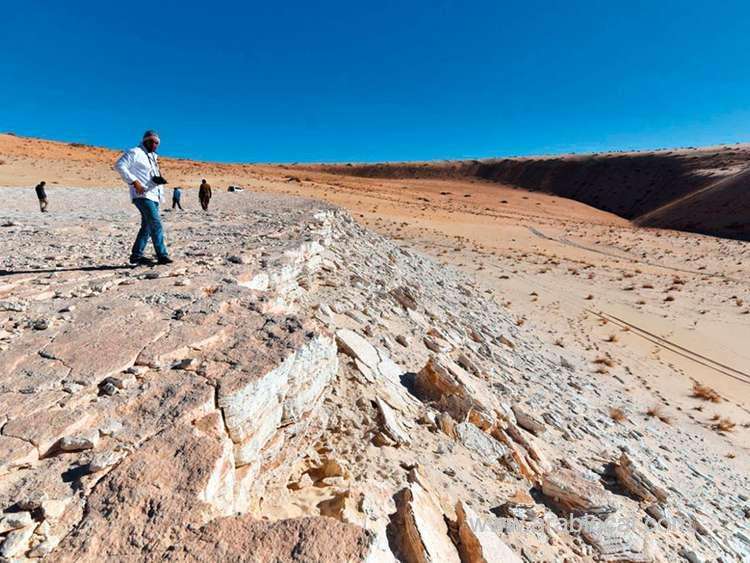
Human and animal footprints dating back 120,000 years have been found in the province of Tabuk, north-western Saudi Arabia. The traces of the footprints were discovered in an old dry lake.
The new archaeological discoveries were unveiled by the Heritage Authority during a press conference held in Riyadh today.
A joint Saudi-international team of archaeologists found the footprints of man, camels, elephants, wild animals and predators around the ancient dry lake.
The archaeological discoveries were made through the joint efforts of the kingdom and international excavation teams.
Dr. Jasser Al Herbish, chief executive of the authority, revealed the details about the new discoveries, pointing out that the team found the traces of seven human footprints, 107 camel footprints, 43 elephant footprints and other traces of different animals. The team also found 233 fossils of elephant and gazelle bones as well as evidence of the existence of predators in the site, he added.
Oldest existence of human life
“This archaeological discovery represents the first scientific evidence about the oldest existence of human life in Arabia and offers a rare glimpse into the natural environment and biodiversity in the region”, Al Herbish said.
Established in February 2020, the Heritage Commission is a Saudi government body with a mandate to support efforts to develop Saudi’s national heritage and protect it from extinction.
Home to many archaeological treasures spread across its several regions, Saudi has five sites that are currently on UNESCO’s World Heritage List: Al Ahsa Oasis, Al Hijr Archaeological Site (Madain Saleh) in AlUla, Al Turaif district in Diriyah, Historic Jeddah, and rock art in the Hail region.
In 2019, Saudi Arabia was also elected to UNESCO’s World Heritage Committee.
SOURCE : GULF NEWS