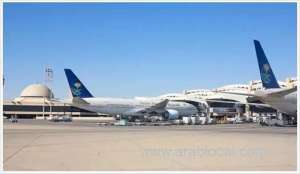
On Sunday, Mohammad Bin Salman announced the establishment of Riyadh Air, a wholly owned company by the Public Investment Fund (PIF)
Through the new national carrier, Riyadh will become a global gateway to the world and a global destination for transportation, trade, and tourism by leveraging Saudi Arabia's strategic geographical location between Asia, Africa, and Europe.
PIF Governor Yasir Al-Rumayyan will chair Riyadh Air, while Tony Douglas, who has more than 40 years of experience in the aviation, transportation, and logistics industries, will lead the company. Saudi and international expertise will be included in the airline's senior management.
The airline will operate from Riyadh as its hub, ushering in a new era for global travel and aviation.
Through the adoption of the latest cutting-edge technology across its advanced fleet of aircraft, Riyadh Air will be a world-class airline.
In addition to adding $20 billion to non-oil GDP, the airline is expected to create more than 200,000 direct and indirect jobs.
With PIF's investment expertise and financial capabilities, the new national airline will expand on the company's operations to become a leading national carrier.
Along with the recently announced masterplan for King Salman International Airport, the new national airline represents PIF's latest investment in the sector.
Through its authentic, warm Saudi hospitality, Riyadh Air aims to enhance its customers' journey while connecting them to over 100 destinations around the world by 2030.
Saudi Arabia's cultural and natural attractions will be accessible to tourists from around the world.
By increasing air transportation options, increasing cargo capacity, and increasing international passenger traffic, Riyadh Air will also support the Saudi National Transport and Logistics Strategy and the National Tourism Strategy.
In order to diversify the local economy, PIF has set up Riyadh Air to unlock the capabilities of promising sectors. Saudi Arabia will benefit from a more financially resilient aviation ecosystem, which will support the industry's global competitiveness